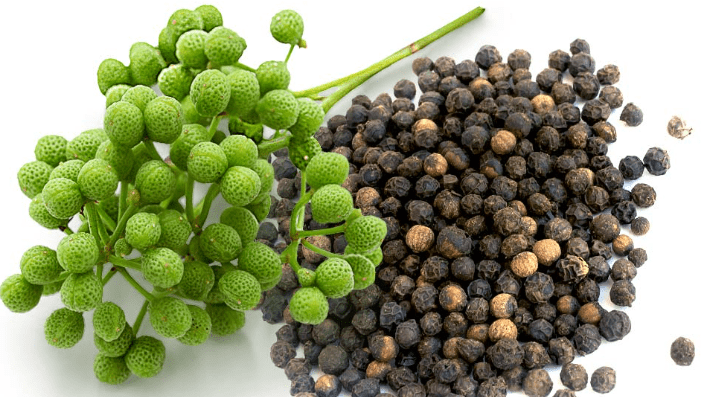
Black pepper, known scientifically as Piper nigrum, is a flowering vine cultivated for its fruit, which is typically dried and used as a spice and seasoning. Native to the Malabar Coast of India, black pepper has been a cornerstone of global cuisine and trade for thousands of years. Dubbed the “King of Spices,” it is valued for its bold flavor, historical significance, and medicinal properties.
Origins and Cultivation
Black pepper originated from the tropical forests of the Western Ghats in India. Today, it is grown in various tropical regions, including Vietnam, Indonesia, Brazil, and Sri Lanka. Vietnam is currently the world’s largest producer and exporter of black pepper (FAO, 2020).
The plant is a perennial vine that thrives in hot, humid climates. It climbs using aerial roots and can grow over 10 feet tall. The peppercorns are the vine’s fruit, harvested while still green and unripe. After harvesting, they are briefly boiled and sun-dried, during which the outer skin shrivels and darkens into the familiar wrinkled black appearance.
Varieties of Pepper
Though black pepper is the most commonly used form, it is not the only one derived from Piper nigrum. The same plant also produces white and green peppers:
Black Pepper: Made from unripe drupes, cooked and sun-dried, which gives it its distinctive pungency and robust flavor.
White Pepper: Made from fully ripe berries, the outer skin is removed before or after drying. It has a milder flavor and is often used in light-colored sauces or dishes for aesthetic reasons.
Green Pepper: Made from unripe drupes, dried or preserved in brine or vinegar. It has a fresher, more herbaceous taste.
Historical Significance
Black pepper has played a crucial role in global history. It was so valuable in ancient times that it was often called “black gold.” The spice trade heavily influenced Roman and medieval European trade networks, with pepper being one of the most sought-after commodities. It was used not only for flavoring but also for preserving food before refrigeration.
During the Age of Exploration, European powers like Portugal, the Netherlands, and England ventured to India and Southeast Asia to secure direct access to spices, including black pepper. These explorations laid the groundwork for centuries of colonial rule and economic expansion (Turner, 2004).
Culinary Uses
Black pepper is one of the most versatile spices in the culinary world. It can be used whole, crushed, or ground into a powder. Its pungent flavor complements various savory dishes—from meats and soups to salads and sauces. Ground black pepper is commonly used as a seasoning, often with salt.
In some cuisines, black pepper is also a feature in sweet dishes. For example, it’s an ingredient in some Scandinavian spice cookies and Indian spiced teas.
Nutritional and Medicinal Properties
Black pepper is a flavor enhancer and a source of potential health benefits. It contains several bioactive compounds, most notably piperine, which gives black pepper its characteristic spiciness and plays a key role in its therapeutic properties.
Health benefits of black pepper include:
Enhanced Nutrient Absorption: Piperine has increased the bioavailability of nutrients such as selenium, vitamin B12, and curcumin (Shoba et al., 1998).
Anti-inflammatory and Antioxidant Effects: Piperine and other compounds in black pepper exhibit anti-inflammatory and antioxidant activities, which can help reduce the risk of chronic diseases (Meghwal & Goswami, 2013).
Digestive Health: Black pepper stimulates the secretion of hydrochloric acid in the stomach, which aids in digestion and reduces the risk of gastrointestinal disorders like bloating and indigestion.
Despite its benefits, excessive consumption can cause gastrointestinal irritation in some individuals. Moderation is key when incorporating black pepper into the diet.
Economic Importance
Black pepper remains an economically significant crop in many developing countries. It provides income for smallholder farmers and plays a vital role in international spice markets. Global demand remains steady, driven by its essential place in kitchens worldwide.
With its low perishability and ease of transport, black pepper has maintained its status as a staple in domestic cooking and the commercial food industry.
Conclusion
Black pepper is more than just a common kitchen spice—it’s a cultural and historical symbol with deep roots in global trade, cuisine, and traditional medicine. From its origin in the Indian subcontinent to its widespread use across the globe, black pepper continues to be a vital part of human civilization. Its pungent aroma, culinary adaptability, and potential health benefits ensure it will remain indispensable for future generations.
References
FAO (2020). Food and Agriculture Organization of the United Nations: Black Pepper Production Data. Retrieved from http://www.fao.org
Meghwal, M., & Goswami, T. K. (2013). “Piper nigrum and piperine: An update.” Phytotherapy Research, 27(8), 1121–1130.
Shoba, G., et al. (1998). “Influence of piperine on the pharmacokinetics of curcumin in animals and human volunteers.” Planta Medica, 64(4), 353–356.
Turner, J. (2004). Spice: The History of a Temptation. Vintage Books.