



Blog
What Is Dong Quai Root And What Are It’s Benefits?

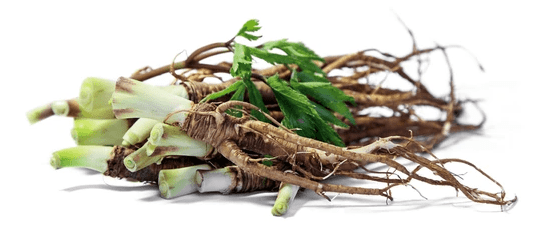
Dong Quai (Angelica sinensis), also known as “female ginseng,” is a traditional herbal remedy used in Chinese medicine for over 2,000 years, primarily to support women’s health. The root of the Angelica sinensis plant, which is native to China, Japan, and Korea, is the part most commonly used in herbal preparations.
Dong Quai is especially revered for regulating the menstrual cycle, easing menopausal symptoms, and promoting reproductive health. Its purported effects come from a rich phytochemical profile that includes ferulic acid, coumarins, and phytosterols, which exhibit antioxidant, anti-inflammatory, and estrogen-like properties.
Traditional and Modern Use
In Traditional Chinese Medicine (TCM), Dong Quai is believed to nourish the blood, invigorate circulation, and balance female hormones. It is often included in formulas for conditions such as:
- Irregular menstruation
- Amenorrhea (absence of menstruation)
- Menstrual cramps (dysmenorrhea)
- Menopausal symptoms (hot flashes, night sweats)
- Fatigue after childbirth
It has gained popularity in the West as a natural remedy for hormone balance and PMS relief, though scientific support is still evolving.
Active Compounds and Mechanism
Dong Quai contains several bioactive compounds:
- Ferulic acid: A potent antioxidant that helps reduce inflammation and promote blood flow.
- Coumarins: Which have blood-thinning and vasodilatory effects.
- Phytosterols: Plant-based compounds that may influence hormone metabolism.
- Polysaccharides: Believed to support immune function.
While Dong Quai is not a phytoestrogen in the same way as soy, it may modulate estrogenic activity in the body, which could account for its effects on hormonal symptoms.
Health Benefits of Dong Quai
1. Menstrual Regulation and PMS Relief
Dong Quai is often used to regulate irregular periods and ease premenstrual symptoms such as bloating, irritability, and cramps. A study published in Fertility and Sterility (2003) evaluated a Chinese herbal formula containing Dong Quai and found improvements in menstrual irregularities and ovulatory function in women with polycystic ovary syndrome (PCOS) (Chen et al., 2003).
However, clinical studies on Dong Quai as a standalone treatment for PMS are limited, and more research is needed to confirm its efficacy.
2. Menopausal Symptom Relief
Dong Quai is sometimes used as a natural alternative to hormone replacement therapy (HRT). Its use in treating hot flashes and night sweats has yielded mixed results.
A randomized controlled trial published in Menopause (1997) showed no significant difference in menopausal symptoms between Dong Quai and placebo groups (Hirata et al., 1997). However, some herbal blends containing Dong Quai, such as TCM formulas with multiple herbs, have shown positive effects, suggesting that synergy with other herbs may be important.
3. Blood Health and Circulation
In TCM, Dong Quai is often prescribed to “nourish blood,” especially after childbirth or illness. Ferulic acid in Dong Quai may help promote circulation and prevent blood clots, potentially benefiting individuals with poor peripheral blood flow or mild anemia.
One study in Phytomedicine (2004) demonstrated that Dong Quai exhibited antiplatelet activity in lab tests, suggesting it may have mild blood-thinning effects (Chiou et al., 2004).
4. Anti-Inflammatory and Antioxidant Effects
Dong Quai also shows promise for its anti-inflammatory and antioxidant activity. A study in Journal of Ethnopharmacology (2006) demonstrated that Dong Quai extracts reduced oxidative stress and inflammation in animal models (Zhao et al., 2006).
These properties may support general wellness, immune health, and cardiovascular function.
Dosage and Forms
Dong Quai is available in multiple forms:
- Dried root (for tea or decoctions)
- Capsules or tablets
- Liquid extracts and tinctures
- Powders and granules
Typical dosage ranges from 500–1,500 mg per day of standardized extract, often divided into two or three doses. Depending on the intended benefits, it’s commonly used in combination with other herbs like black cohosh, licorice, or peony root.
Safety and Side Effects
Dong Quai is generally considered safe for short-term use when taken at recommended doses. However, it may cause photosensitivity, digestive upset, or increased menstrual flow in some people.
Because of its potential blood-thinning effects, Dong Quai should not be used by individuals who:
- Take anticoagulant medications (e.g., warfarin)
- Are preparing for surgery
- Have bleeding disorders
Dong Quai is not recommended during pregnancy, as it may stimulate uterine contractions and increase the risk of miscarriage. Breastfeeding women should also avoid it due to lack of safety data.
Drug Interactions
Dong Quai may interact with:
- Blood thinners (e.g., aspirin, heparin, warfarin)
- Hormonal therapies (birth control, estrogen therapy)
- Photosensitizing drugs, increasing the risk of sunburn
Consult a healthcare provider before using Dong Quai, especially if you are on medications or managing hormonal conditions.
Conclusion
Dong Quai root has a long-standing history in traditional medicine, particularly for supporting women’s reproductive health, easing menstrual discomfort, and improving blood circulation. While modern research is still catching up, early evidence and traditional use suggest that Dong Quai may offer gentle, plant-based support for those experiencing hormonal imbalances or menstrual issues.
As with all supplements, it should be used with care and preferably under the guidance of a qualified healthcare provider—especially in people with underlying health conditions or those taking medications.
References
- Chen, Z. J., et al. (2003). Clinical evaluation of a traditional Chinese herbal medicine for ovulation induction in polycystic ovary syndrome. Fertility and Sterility, 80(Suppl 3), 98–101.
- Hirata, J. D., et al. (1997). Does Dong Quai have estrogenic effects in postmenopausal women? A double-blind, placebo-controlled trial. Menopause, 4(3), 139–144.
- Chiou, W. F., et al. (2004). Investigating the mechanism of antiplatelet effect of Angelica sinensis. Phytomedicine, 11(7–8), 606–612.
- Zhao, J., et al. (2006). Anti-inflammatory and antioxidant effects of Angelica sinensis extracts in experimental models. Journal of Ethnopharmacology, 104(1–2), 312–316.


