



Blog
What Is Japanese Knotweed And What Are It’s Benefits?

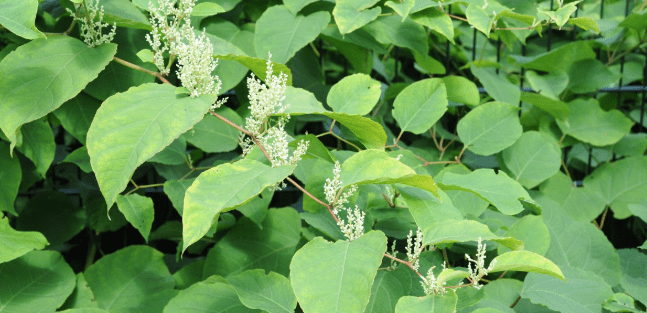
Japanese knotweed (Reynoutria japonica, formerly Fallopia japonica) is a fast-growing, highly invasive plant that has become a significant concern in many parts of the world. Known for its bamboo-like stems and heart-shaped leaves, Japanese knotweed can thrive in a wide range of environments and is particularly notorious for its ability to cause structural damage to buildings and infrastructure. Despite its aggressive nature, the plant has a long history of use in traditional medicine and is gaining interest in its health-promoting compounds.
Botanical Profile and Origin
Japanese knotweed is a perennial herbaceous plant native to East Asia, particularly Japan, China, and Korea. Due to its robust root system, it was introduced to Europe and North America in the 19th century as an ornamental plant and for erosion control (1). However, it quickly spread beyond its intended areas and established itself as an invasive species.
The plant can grow up to 3–4 meters (10–13 feet) tall in a single growing season. It has hollow, jointed stems similar in appearance to bamboo, and broad, green, shovel-shaped leaves. In late summer, it produces small clusters of creamy-white flowers.
Invasiveness and Environmental Impact
The International Union for Conservation of Nature (IUCN) lists Japanese knotweed as one of the world’s worst invasive species. Its extensive underground rhizome system can spread several meters from the original plant, making it extremely difficult to eradicate (2).
Ecological Effects:
- Biodiversity loss: It outcompetes native plants by forming dense thickets that block sunlight and monopolize soil nutrients and water.
- Soil degradation: Knotweed alters the chemical composition of the soil, making it less hospitable for native species.
- Erosion: While initially planted for erosion control, the dieback of its foliage in winter can leave soil exposed.
Structural Damage:
The rhizomes of Japanese knotweed can exploit cracks and weaknesses in concrete, tarmac, and building foundations, causing significant structural damage over time. Its presence near properties in the UK can even impact mortgage approval and property values (3).
Control and Management
Controlling Japanese knotweed is challenging due to its resilience and rapid growth. Effective management often requires a combination of mechanical, chemical, and biological strategies.
Mechanical Methods:
- Excavation: Digging out the entire plant and its rhizomes is labor-intensive and must be done carefully to prevent regrowth.
- Cutting and covering: Regular cutting followed by covering with a root barrier may suppress growth, though it rarely eliminates the plant.
Chemical Control:
Herbicides like glyphosate are commonly used, though multiple applications over several years are often necessary. Chemical treatment must be carefully managed to avoid environmental contamination.
Biological Control:
Research is underway to use natural predators, such as the psyllid insect (Aphalara itadori), to control Japanese knotweed populations. However, such measures are still in the experimental phase in most regions (4).
Medicinal Uses and Health Benefits
Despite its notorious reputation as an invasive weed, Japanese knotweed has a history of use in traditional Chinese and Japanese medicine. It contains several bioactive compounds, most notably resveratrol, a polyphenol in grapes and red wine.
Key Compounds:
- Resveratrol: Known for its antioxidant, anti-inflammatory, and cardioprotective properties.
- Emodin: A compound with laxative effects and potential anti-cancer properties.
- Polydatin: A glycoside form of resveratrol with similar health benefits.
Potential Health Benefits:
- Cardiovascular Health: Resveratrol from knotweed has been studied for its potential to improve endothelial function and reduce blood pressure and LDL cholesterol (5).
- Anti-Aging: As an antioxidant, resveratrol may reduce oxidative stress and promote longevity.
- Immune Support: In some studies, Emodin and resveratrol have demonstrated anti-inflammatory and antimicrobial effects (6).
- Lyme Disease Support: Herbal practitioners often use Japanese knotweed in protocols to support individuals with Lyme disease due to its potential immune-boosting and anti-inflammatory actions (7).
While these benefits are promising, more clinical trials are needed to validate the safety and efficacy of Japanese knotweed supplements for therapeutic use.
Legal and Regulatory Status
Due to its invasive nature, Japanese knotweed is subject to strict regulations in many countries. For example:
- United Kingdom: Under the Wildlife and Countryside Act 1981, it is illegal to plant or cause Japanese knotweed to grow in the wild.
- United States: Regulated at the state level, it is classified as a noxious weed in several states.
- European Union: It is included in the list of invasive alien species of Union concern, and its cultivation and transport are restricted.
Landowners are typically responsible for managing and containing the spread on their property.
Conclusion
Japanese knotweed is a paradoxical plant—a destructive invasive species and a source of promising medicinal compounds. Its rapid growth and structural aggressiveness make it a significant environmental and economic concern, especially in temperate regions with no natural predators. At the same time, its potential benefits in cardiovascular health, immune support, and herbal medicine highlight the need for a balanced approach that recognizes the challenges and opportunities it presents.
As science continues to explore the full potential of Japanese knotweed, effective management and public education remain essential to mitigating its negative impact while possibly harnessing its therapeutic value.
References
- Bailey, J. P., & Conolly, A. P. (2000). Prize-winners to pariahs—a history of Japanese knotweed s.l. (Polygonaceae) in the British Isles. Watsonia, 23(1), 93–110.
- Child, L., & Wade, M. (2000). The Japanese knotweed manual. Packard Publishing Limited.
- Fennell, M., Wade, M., & Bacon, K. L. (2018). Japanese knotweed: Property damage, invasive species, and the law. Journal of Property, Planning and Environmental Law, 10(3), 206–220.
- Shaw, R. H., Bryner, S., & Tanner, R. (2009). The life history and host range of the Japanese knotweed psyllid, Aphalara itadori, and its implications for biological control. Biocontrol, 54(4), 639–650.
- Baur, J. A., & Sinclair, D. A. (2006). Therapeutic potential of resveratrol: The in vivo evidence. Nature Reviews Drug Discovery, 5(6), 493–506.
- Shakibaei, M., et al. (2011). Resveratrol potentiates TNF-α-induced apoptosis and prevents osteoarthritis: Evidence for its dual role in inflammation and apoptosis. Free Radical Biology and Medicine, 50(9), 1143–1156.
- Buhner, S. H. (2005). Healing Lyme: Natural Healing and Prevention of Lyme Borreliosis and Its Coinfections. Raven Press.


