


$19.99


$19.99

$23.99

$23.99
$19.99

$19.99
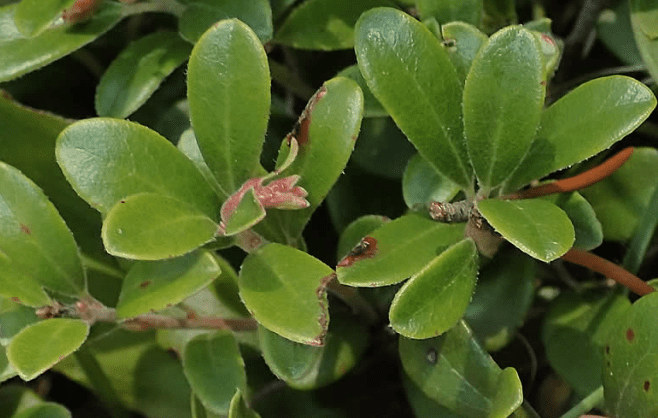
Uva ursi (Arctostaphylos uva-ursi), also known as bearberry, is a small evergreen shrub native to North America, Europe, and Asia. The name “uva ursi” translates from Latin as “bear’s grape,” a nod to the fact that bears are fond of the plant’s red berries. However, the plant’s medicinal value is found in its leaves, which have been used for centuries in traditional medicine, particularly for urinary tract health. Uva ursi remains a popular herbal remedy, particularly for bladder and kidney conditions.
Uva ursi belongs to the Ericaceae family, which includes blueberry and cranberry. It grows low to the ground, with leathery, oval-shaped green leaves and clusters of small, white to pink bell-shaped flowers. By autumn, these flowers give way to red berries, though only the leaves are used in herbal medicine.
Harvested in the summer and early autumn, the leaves are dried and often used to prepare teas, tinctures, extracts, or capsules. The active compounds in the leaves give Uva Ursi potent medicinal properties.
The main active constituent in uva ursi leaves is arbutin, a glycoside that converts to hydroquinone in the body—a compound with antibacterial properties, particularly against pathogens in the urinary tract. Other components include tannins (which have astringent properties), flavonoids, ursolic acid, and volatile oils.
These compounds collectively contribute to the herb’s antiseptic, anti-inflammatory, and diuretic effects, which make Uva Ursi effective in managing certain urinary disorders.
Uva ursi has a long history of use by Indigenous peoples and herbalists. Native American tribes used its leaves as a remedy for urinary tract infections (UTIs), kidney stones, and bladder inflammation. European herbalists have employed it since at least the 13th century.
In contemporary herbal medicine, Uva Ursi is primarily used for:
A 2010 review of medicinal plants for UTIs confirmed that uva ursi shows antimicrobial activity against common uropathogens like Escherichia coli [1]. Its diuretic properties help flush out bacteria from the urinary tract, while the astringent tannins soothe inflamed tissues.
Arbutin, the primary active compound, is hydrolyzed in the body to form hydroquinone, which exerts antibacterial activity in the urinary tract. Hydroquinone is excreted in the urine, where it can directly combat bacterial growth. This localized action helps cleanse the urinary tract without affecting gut microbiota.
Tannins in the leaves provide an astringent effect, tightening mucous membranes and potentially reducing inflammation. Additionally, flavonoids and phenolic acids contribute antioxidant and anti-inflammatory benefits.
Although Uva Ursi has a long history of use, scientific research supporting its efficacy is somewhat limited and often dated. A few studies have shown promise:
However, many health professionals emphasize that more rigorous clinical trials are needed to determine its effectiveness and optimal dosage conclusively.
Uva ursi is available in several forms, including:
Typical dosages range from 400–800 mg of standardized extract, taken up to four times daily for short-term use. Tea can be made by steeping 1–2 teaspoons of dried leaves in hot water for 10–15 minutes.
Due to the potential toxicity of hydroquinone, uva ursi should not be used for more than 5–7 days at a time or more than five times per year, and only under the supervision of a healthcare provider.
While generally safe in moderate doses and for short-term use, uva ursi can cause side effects such as nausea, vomiting, and greenish-brown urine. More serious risks include:
Uva ursi is not recommended for:
Using uva ursi alongside vitamin C or acidic foods may reduce its effectiveness, as acidic urine can prevent the conversion of arbutin to hydroquinone.
Uva ursi leaves offer a natural, plant-based remedy with a long history of use for urinary tract health. The herb’s key active compound, arbutin, has antibacterial properties that help fight infections and reduce inflammation in the urinary system. While more research is needed to validate some of its traditional claims, Uva Ursi remains a popular option in herbal medicine.
As with any herbal supplement, caution and professional guidance are advised, especially given the risks associated with long-term use. Uva Ursi can be a valuable ally in maintaining urinary tract health and preventing recurring infections when used responsibly.
References:


No account yet?
Create an Account